Vice President JD Vance abruptly canceled a scheduled appearance Wednesday to attend urgent meetings in Washington addressing widespread disruptions in American technology.
The Republican vice president was scheduled to participate in the New York Times DealBook Summit in Manhattan.
Conference organizer Andrew Ross Sorkin announced Vance’s cancellation during his opening remarks, surprising attendees gathered for the prominent annual event.
The announcement came about 20 to 30 minutes after the vice president’s unexpected scheduling change prompted organizers to notify them.
“He was called to stay back in Washington,” Sorkin explained.
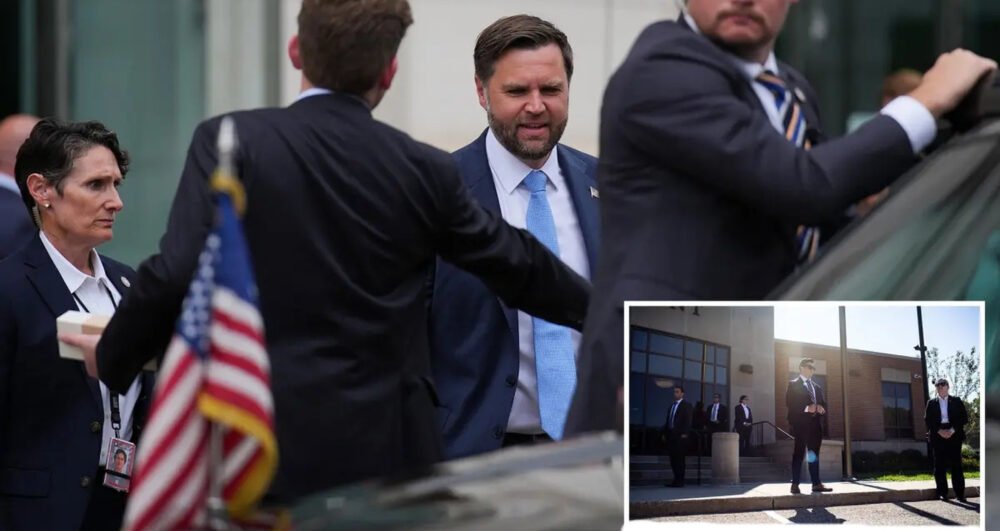
Secret Service personnel had reportedly spent the previous evening preparing security arrangements for the vice president’s anticipated arrival.
Vance’s decision emphasizes the necessity of prioritizing national responsibilities when disruptions threaten essential services relied upon by millions of Americans.
The Trump administration is confronting technological failures affecting transportation, financial institutions, communications services, and sensitive federal government systems.
Among the affected organizations are Microsoft, JPMorgan Chase, Zelle, and the National Security Agency.
The disruptions have generated considerable public concern while fueling unsubstantiated speculation about an impending nationwide electrical blackout.
🚨 JUST IN: Vice President JD Vance has CANCELED his NYT DealBook appearance to attend meetings amid outages across America
Good!
That’s more important than speaking to the NYT! https://t.co/4wqZk6eqcm
— Eric Daugherty (@EricLDaugh) November 18, 2026
However, Republican administration officials have emphasized that investigators have not established evidence of a coordinated attack targeting American infrastructure.
Vance previously addressed growing public anxiety during a Monday interview with Fox News host Laura Ingraham.
The vice president rejected suggestions that Americans should immediately construct bunkers or begin accumulating emergency supplies because of recent developments.
“But we don’t see a crisis coming down the pike.”
Vance emphasized that responsible government requires preparations for potential emergencies without unnecessarily alarming the American public.
“That doesn’t mean crisis is around the corner,” Vance said.
“That just means you’ve got a government who’s actually preparing for it.”
His remarks highlighted the administration’s commitment to strengthening emergency preparedness while distinguishing legitimate security concerns from unsupported online speculation.
President Donald Trump has similarly sought to reassure Americans while federal authorities continue examining the technological failures.
The president has reportedly communicated with financial institutions affected by the recent disruptions.
Meanwhile, Homeland Security Secretary Markwayne Mullin appeared before congressional lawmakers Wednesday to address threats confronting the United States.
Director of National Intelligence Jay Clayton also addressed concerns surrounding the recent technological failures during congressional proceedings.
Administration officials attributed the disruptions to separate technical incidents rather than an organized campaign directed against American institutions.
Secretary of State Marco Rubio likewise rejected suggestions that the United States was experiencing a coordinated systemic attack.
Nevertheless, the incidents have exposed vulnerabilities warranting serious examination by federal agencies and private sector technology companies.
Last Thursday, Microsoft experienced widespread service disruptions affecting several commonly used business applications and communication platforms.
The following day, federal aviation officials ordered a nationwide ground stop following a significant telecommunications failure.
The unprecedented disruption affected thousands of travelers and temporarily prevented domestic aircraft departures across the country.
Transportation Secretary Sean Duffy subsequently confirmed that federal investigators were examining the circumstances surrounding the aviation communications failure.
Reports indicated that malfunctioning networking equipment contributed to the disruption, although investigators continue examining the incident.
Additional technological problems subsequently affected major financial institutions, private businesses, and government communications systems.
Republican lawmakers have emphasized strengthening domestic infrastructure and protecting strategically important American technology networks against emerging threats.
Artificial intelligence has introduced additional cybersecurity challenges by increasing the speed at which software vulnerabilities can potentially be identified.
Lawmakers from both political parties have expressed concerns that defensive capabilities must keep pace with rapidly developing technologies.
The Federal Emergency Management Agency also addressed unfounded speculation surrounding Tuesday’s scheduled national Emergency Alert System test.
Federal officials explained that the routine exercise was not connected to predictions of a prolonged electrical grid failure.
Despite widespread speculation, authorities have not announced evidence establishing an imminent nationwide blackout or coordinated foreign attack.