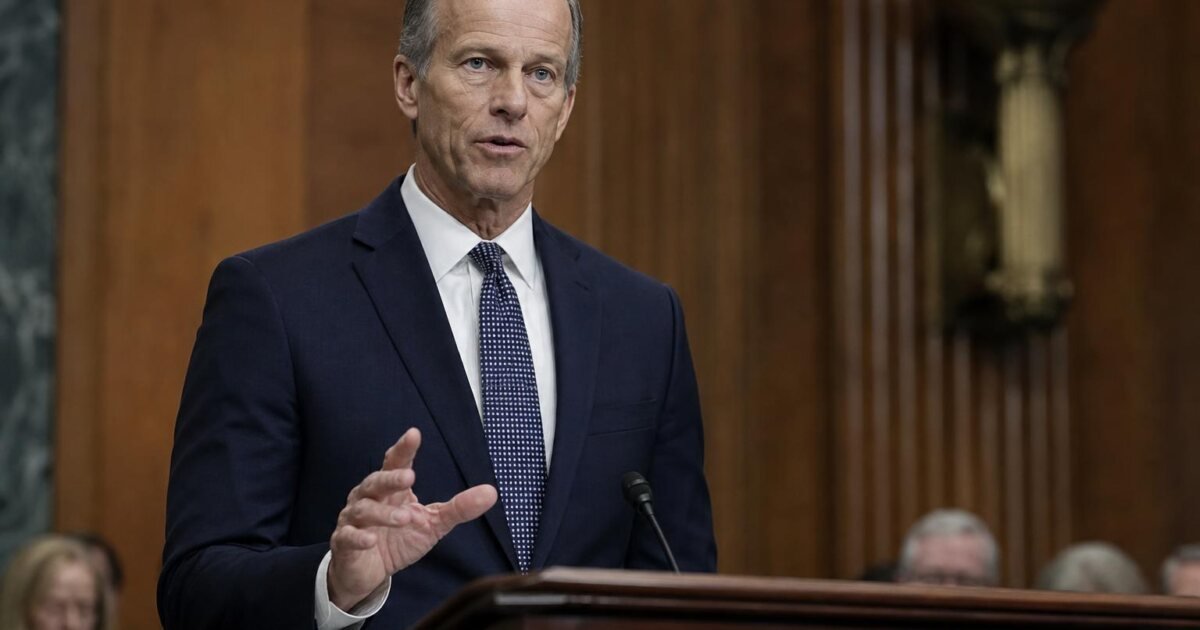
Senate Republican Leader John Thune is giving conservatives another reason to question whether he is the right person to lead the party. After Republicans suffered midterm losses that will cost them their Senate majority in January, Thune’s answer was to suggest that the GOP needs to connect more with the political “middle.”
But for many Trump supporters, that sounds less like a strategy for rebuilding the party and more like another attempt to drag Republicans back toward the establishment politics voters have spent years rejecting.
Thune was reelected as Senate Republican leader despite the party’s disappointing midterm performance. Now, instead of facing the growing frustration among conservative voters over the Senate’s legislative record, he is pointing to broader economic conditions and suggesting Republicans need to appeal to a different group of voters.
Speaking about the election results, Thune cited exit polling that highlighted concerns about the war, the economy, inflation, and gasoline prices.
“Any exit poll that you look at would tell you it was about the war, it was about the economy, it was about inflation, it was about gas prices, none of which any of our candidates had much control over,” Thune said in remarks shared on social media November 18.
That explanation has not gone over well with conservatives. For many on the right, the problem was not simply inflation or gas prices. It was also the growing frustration with Republican lawmakers who had opportunities to fight for their voters’ priorities but failed to deliver the kind of results supporters expected.
Conservative commentator Eric Daugherty pushed back against Thune’s message, warning that the party’s effort to reach the “middle” must not turn into a return to the “old, failed pre-Trump GOP.”
His criticism reflects a broader concern among Trump-aligned Republicans: They do not want Senate leadership using an election setback as an excuse to abandon conservative priorities or move toward the same establishment approach that frustrated the party’s base before Trump reshaped the GOP.
And immigration is one of the biggest concerns.
For many conservatives, any move toward amnesty or another immigration compromise would be a major betrayal of the voters who have consistently demanded stronger border enforcement. They want Republicans to stand behind the policies that helped build the modern conservative movement, not search for ways to make the party look more like its political opponents.
The frustration also goes beyond Thune’s latest comments. Some conservatives argue that Senate Republicans failed to give their own voters enough reasons to show up at the polls. They point specifically to the party’s handling of legislation, including the SAVE America Act, which became an important issue for voters expecting Republican leaders to advance conservative priorities.
The argument from critics is that Republican voters cannot be expected to remain enthusiastic when they repeatedly hear campaign promises but see little action from their representatives in Washington.
One estimate cited in the debate suggests that 35% of Trump voters stayed home. That figure has fueled criticism that the party’s turnout problems were not just about the economy or outside political circumstances. Frustration with Republican leadership may also have played a role.
Instead of asking why so many conservative voters became discouraged, critics believe Thune is focusing too heavily on winning over the political middle. That raises an obvious question: What exactly does he intend to sacrifice to get there?
Does reaching moderate voters mean communicating conservative policies more effectively, or does it mean backing away from the issues that matter most to Republican supporters? The distinction is important, particularly when immigration, border security, and government accountability remain major priorities for the conservative base.
Thune’s position could become an even bigger source of tension as Republicans prepare to enter the Senate minority in January. Democrats will take control of the chamber, leaving Republicans with fewer opportunities to move their legislative agenda forward without bipartisan support.
That makes strong leadership more important, not less. Conservatives want a Senate Republican leader who will fight for the party’s priorities, challenge Democratic policies, and hold the line on issues that brought voters into the Republican coalition.
Instead, Thune’s latest message has left critics wondering whether he understands the frustration coming from the very voters Republicans need to keep engaged.
The Republican Party did not spend years building a movement around Trump’s agenda only to return to the political habits of the pre-Trump establishment. For many conservatives, the answer to disappointing election results should be stronger leadership, clearer priorities, and a serious effort to deliver on promises—not another round of calls to move toward the middle.
Thune may believe that appealing to moderate voters is the path forward. But before asking conservatives to accept another shift in direction, he should answer a more immediate question: What happened to the promises Republican voters were expecting their Senate leaders to fight for?
With the party preparing to lose its Senate majority, Thune’s leadership is facing renewed scrutiny. And judging by the reaction from conservative commentators, his latest comments have done little to reassure a Republican base that is already frustrated with Washington’s establishment politics.