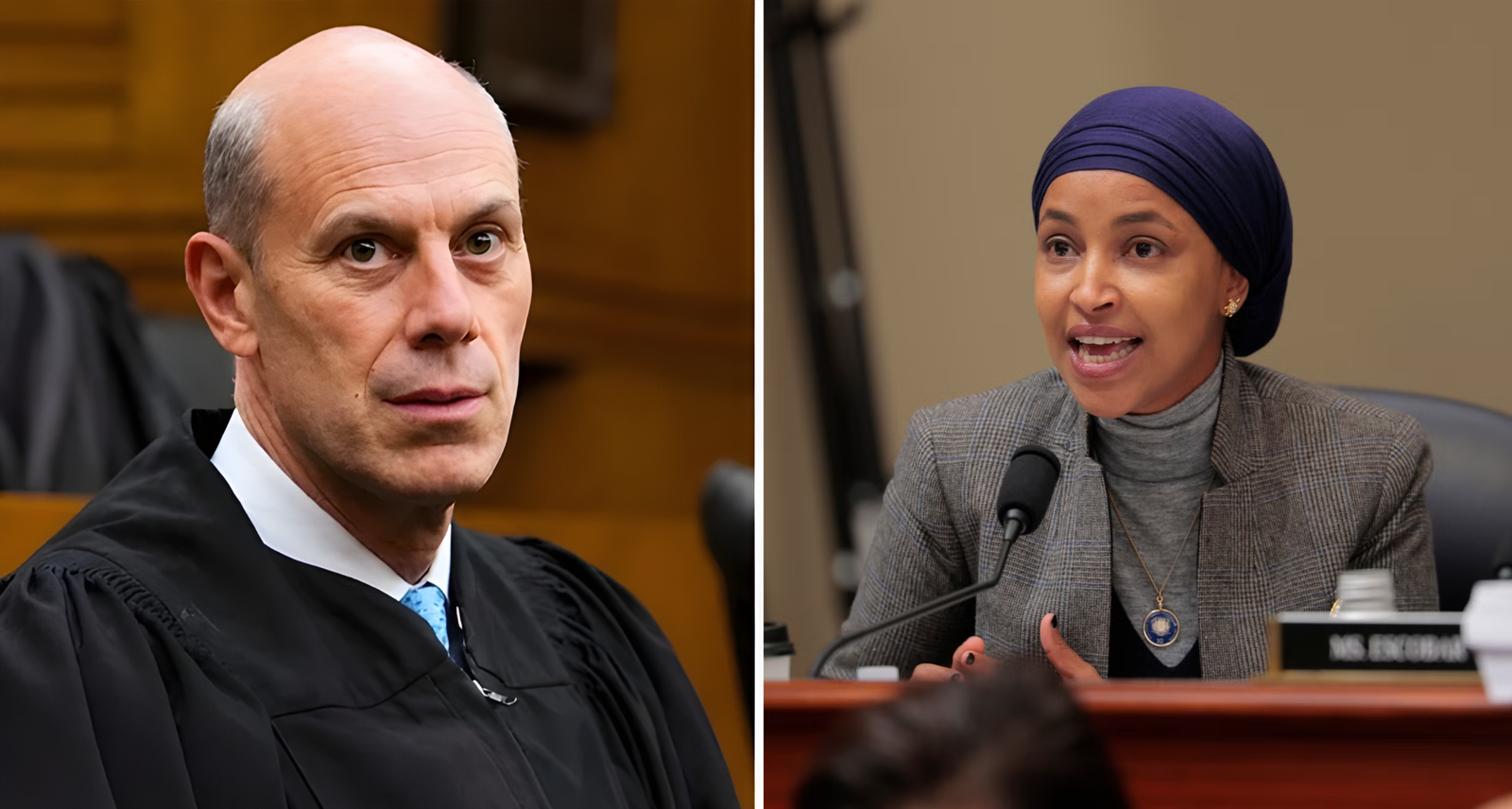
Rep. Ilhan Omar’s legal troubles are approaching a new public milestone, with closely guarded court records potentially opening next week.
A federal judge has set deadlines that could expose additional details surrounding the search of the Minnesota Democrat’s Washington home.
Chief U.S. District Judge James Boasberg indicated Tuesday that portions of the search warrant could become public by Monday.
The anticipated disclosure could include the partially redacted warrant and at least 12 other files currently on the sealed docket.
Prosecutors have until Friday to identify material they believe could compromise the investigation and propose redactions.
The release remains subject to objections involving particular documents, leaving the precise scope of Monday’s disclosure unresolved.
Still, the hearing established a path toward greater transparency surrounding the immigration fraud investigation involving the outspoken congresswoman.
“Parts of the warrant can be released,” Boasberg told Special Assistant U.S. Attorney Alessandra Serano.
The judge noted that Omar had already seen the warrant, according to the New York Post’s account.
Judicial Watch and numerous media organizations have sought access to records associated with the search of her residence last month.
Sean O’Donnell, a senior attorney with the conservative watchdog organization, welcomed the prospect of disclosure.
“There’s no reason this should be withheld from the public,” O’Donnell told the Post.
He expected substantial warrant material to become available, including an inventory of items investigators removed from Omar’s home.
That inventory could provide a clearer picture of what agents collected without disclosing the government’s entire investigative file.
A 67-page affidavit accompanying the warrant contains the “vast majority” of information about the investigation, Boasberg said.
The judge described releasing that affidavit at this stage as “premature,” separating it from other materials under consideration.
The affidavit’s continued sealing would leave much of the government’s evidence unavailable even after the expected document release.
Tuesday’s hearing also exposed tension between prosecutors defending secrecy and administration officials publicly discussing allegations against Omar.
Boasberg pointed to statements from Vice President JD Vance and Homeland Security Secretary Markwayne Mullin about the investigation.
The judge cited those public comments in weighing how much information should remain shielded from public view.
Vance discussed the allegations during a March interview with podcaster Benny Johnson.
“We actually think that Ilhan Omar definitely committed immigration fraud against the United States of America,” Vance said.
Mullin addressed allegations involving Omar’s marriage during a September appearance with Johnson.
“We know that she married her brother to try to bring him to the United States,” Mullin said.
“We know he lives now in London,” he added.
Mullin also suggested investigators were examining broader questions involving her family’s migration to the United States.
Border czar Tom Homan has likewise described the government as building a “strong” case against Omar.
When Boasberg raised administration officials’ public remarks, Serano distanced herself from their statements.
The prosecutor told the judge that “I had zero control” over what those officials said.
“Seems to be a common refrain,” Boasberg responded.
The exchange highlighted the difficulty of arguing for secrecy while prominent officials discuss the same investigation publicly.
He has faced sharp criticism for approving nondisclosure orders involving subpoenas for Republican lawmakers’ telephone records.
Those orders concealed the subpoenas from affected lawmakers and prompted calls from Republicans for the judge’s impeachment.
In this proceeding, however, Judicial Watch’s transparency effort has found support in Boasberg’s willingness to consider releasing documents.
The hearing also touched on another sealed Washington docket connected to property seized from Omar.
That separate proceeding involves a request from her attorneys seeking the return of items taken during the search.
Prosecutors are expected to explain by Monday why some records in that proceeding should remain sealed.
“There are several dockets,” Serano told Boasberg, without clarifying whether she meant additional cases beyond the two Washington proceedings, The New York Post reported.
For now, the next steps are specific: proposed redactions Friday, possible disclosures Monday and further explanations concerning the property records.